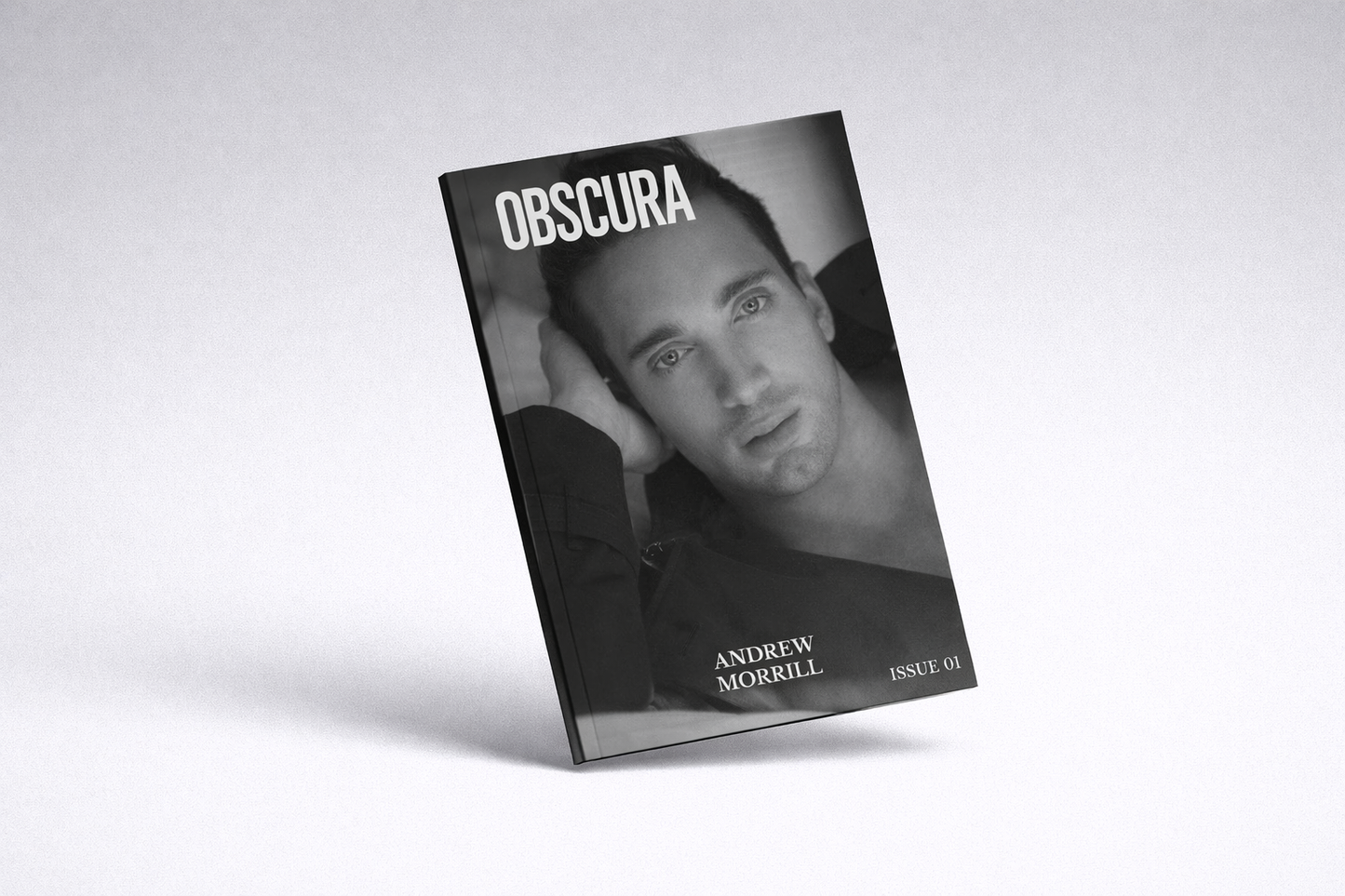
OBSCURA No. 3 — Andrew Morrill The London Hotel Series
OBSCURA No. 3 — Andrew Morrill The London Hotel Series
Couldn't load pickup availability
OBSCURA No. 3
Andrew Morrill — The London Hotel Series
Photographed by Claudio Harris
London
OBSCURA No. 3 continues the archive with a new chapter in contemporary image-making.
In an exclusive London hotel, Claudio Harris turns velvet corridors, gilded mirrors, and private English suites into a cinematic stage. Model Andrew Morrill steps into a space suspended between refinement and desire where editorial polish meets the quiet tension of intimacy.
The London Hotel Series blurs the boundary between fashion portraiture and fine-art storytelling. Light moves across marble, silk, and skin with deliberate restraint. Each image is composed with sculptural clarity controlled, sensual, and unmistakably modern.
This edition explores the choreography of presence: a man alone in a room designed for discretion, framed not as spectacle, but as study.
The Object
Printed in A5 format, OBSCURA No. 3 is conceived as a collectible gallery brochure minimal, tactile, and intimate in scale.
* 28 pages
* A5 portrait (148 × 210 mm)
* 170–200 gsm uncoated stock (depending on your final choice)
* Perfect Bound
* Strictly limited numbered copies
* Colour throughout
The Series
Andrew London hotel photo series captures a refined tension rarely seen in contemporary men’s editorials. The setting private, hushed, cinematic becomes as present as the subject himself.
The work resists spectacle. Instead, it invites proximity.
The body is framed not for consumption, but for contemplation.
Uncensored Archive
As with all OBSCURA publications, the interior images are presented in their complete, uncensored form in accordance with the project’s commitment to artistic freedom.
Nothing is cropped for comfort.
Nothing is blurred for discretion.
The printed edition remains a space where image and expression are preserved as created.
Why it Matters
OBSCURA exists to resist self-censorship and restore editorial courage around the masculine gaze not for provocation, but for cultural memory. This first zine sets the tone: gallery-level curation, collectible design, and work that asks the viewer to look longer.